

Home » RESET: Renewable Energy Siting & Engagement for Tomorrow » Solar Grazing
Solar Grazing
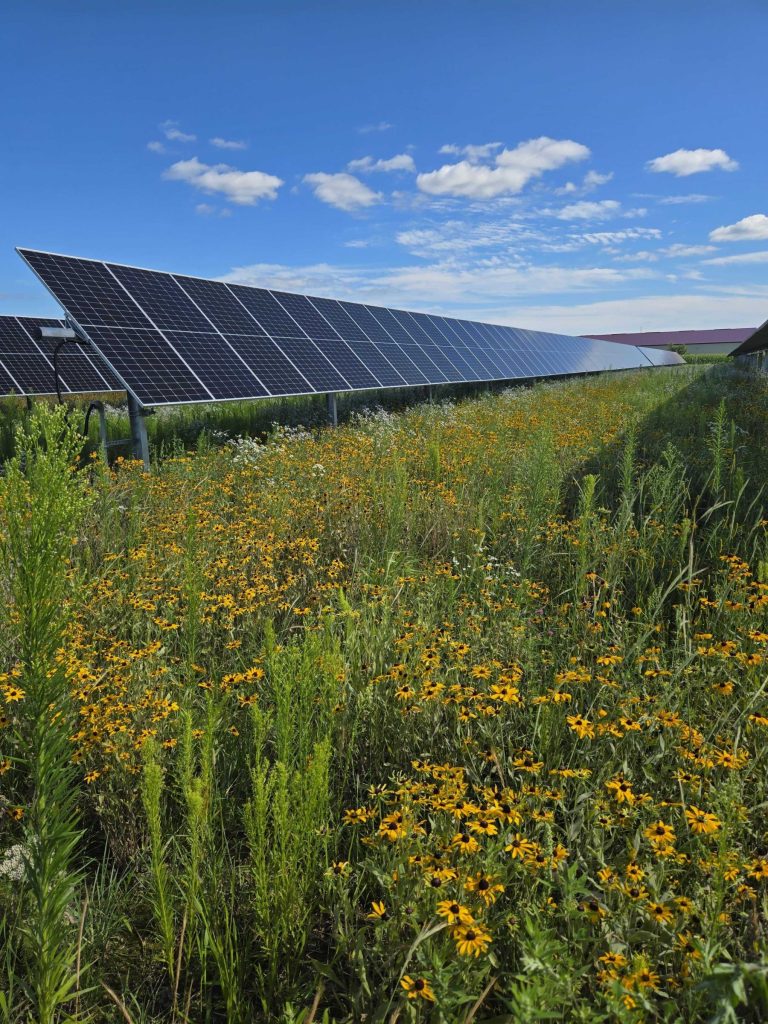

What is solar grazing?
Solar grazing is the practice of using livestock, most commonly sheep, to manage vegetation on solar energy sites while the panels continue to generate electricity. It is a form of agrivoltaics that allows land to be used for both renewable energy production and agriculture, helping reduce maintenance costs, support farmers with additional income, and address concerns about farmland loss.
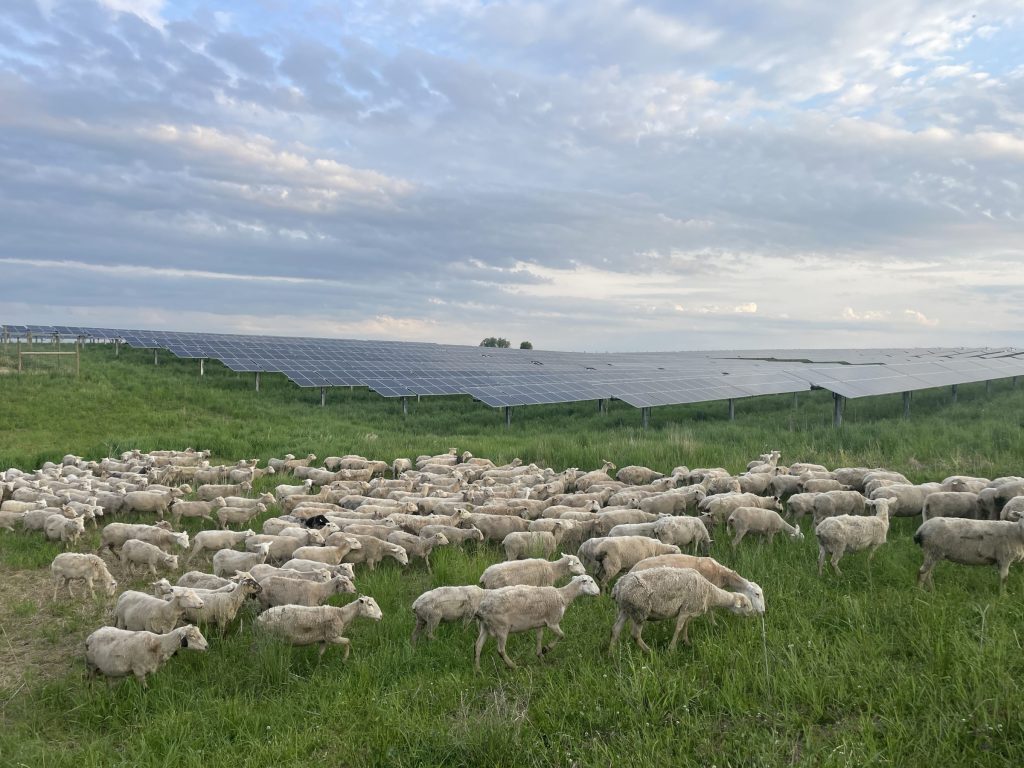
Solar Grazing FAQs
Solar grazing allows sheep to graze under solar panels, helping manage vegetation while creating additional income opportunities for farmers. Explore this practice and learn more information on our Agrivoltaics page. When planned collaboratively between farmers and solar operators, this dual-use approach can reduce vegetation management costs, support agricultural livelihoods, and preserve soil health. It may also strengthen community relationships and improve public perception of solar projects.
Both the solar site operator and farmer should walk the site together, confirm secure perimeter fencing, and agree on responsibilities such as protecting equipment, vegetation management standards, and communication protocols. They should also decide how water will be provided, how paddocks will be arranged, and consider starting with a short-term contract to ensure the partnership works well.
Operators should ensure the site is safe and accessible for grazing by minimizing soil damage during construction, securing exposed wires, and allowing flexible grazing infrastructure like temporary fencing. They should provide the farmer with site maps, allow reliable access, and review insurance and contract details to support smooth operations.
Farmers should confirm insurance coverage, plan site access for vehicles, and develop a detailed grazing plan that outlines timing, number of sheep, and paddock layout. They are also responsible for providing water, minerals, and proper signage, as well as guiding solar workers on how to safely interact with livestock.
Clear communication and coordination are essential. Both parties should agree on how to track visits, report issues, and handle changes in grazing plans or site conditions. Working together on layout decisions, vegetation goals, and day-to-day operations helps prevent conflicts and ensures both energy production and agricultural use are successful.
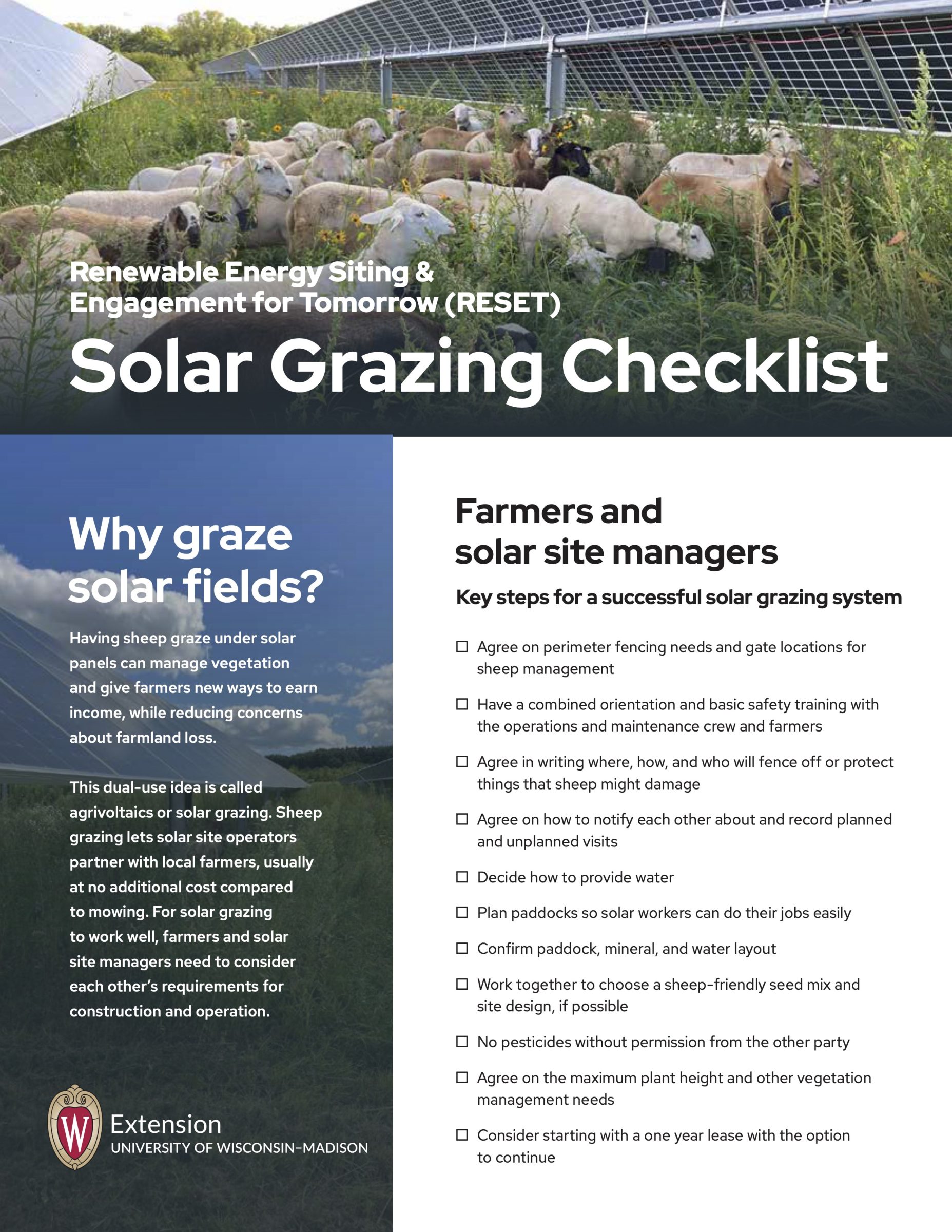
RESET Solar Grazing Checklist
This Solar Grazing Checklist provides practical guidance for farmers and solar site managers interested in grazing sheep at solar sites.
The resource outlines key steps for successful solar grazing partnerships, including planning site access, fencing, vegetation management, and communication between farmers and solar operators. It also includes tips, planning considerations, and additional resources to help support effective agrivoltaic systems.
Solar Grazing Resources
American Solar Grazing Association
The American Solar Grazing Association (ASGA) provides resources and guidance for integrating livestock grazing with solar energy development. Through its website, solargrazing.org, the organization offers information for farmers, solar developers, and communities on how solar grazing works, best practices for managing sheep on solar sites, and the benefits of agrivoltaics. The resource also highlights case studies, training opportunities, and tools to help support successful solar grazing partnerships.
Sheep + Solar
Sheep + Solar is an educational video that explains how one Wisconsin farmer has implemented agrivoltaics. It touches on benefits for vegetation management, opportunities for farmers, and considerations for coordinating between solar operators and livestock producers.

RESET: Engaging Wisconsin Communities in Renewable Energy
Contact RESET:
3500 University Avenue, Madison Wisconsin, 53705